




























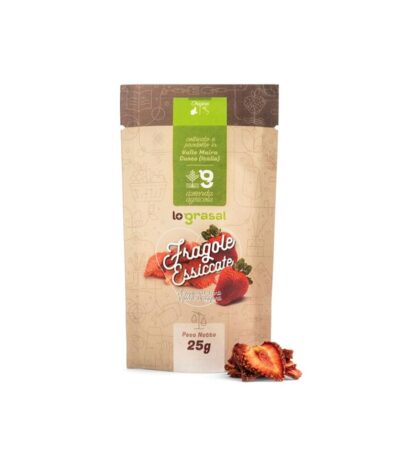
Fragole essiccate
€9.00Fragole essiccate.
solo pura frutta essiccata a bassa temperatura nel comodo sacchetto apri e chiudi.
Per una merenda sana. Comodo e pratico.
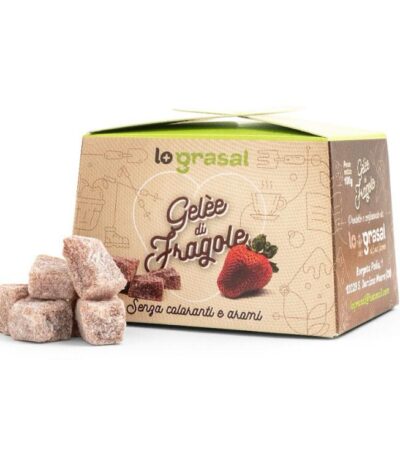
Galée di Fragole
€4.50Dadini morbidi di fragole senza coloranti ne aromi aggiunti.
Scatolina richiudibile da 150g comoda da trasportare nelle gite o come semplice parentesi di dolcezza.
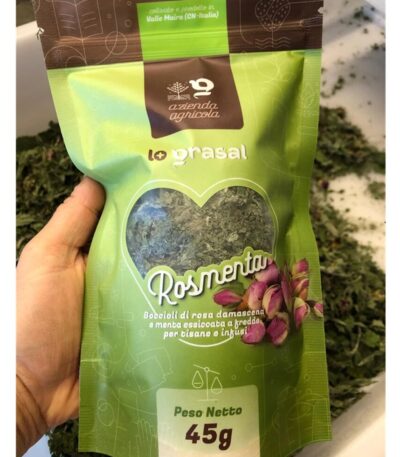
Rosmenta
€8.00insieme di boccioli di rosa damascena e menta essiccata a bassa temperatura.
Ideale per tisane oppure sbriciolato in insalate e frittate sfiziose!
Per le tisane è necessario lasciare in infusione almeno 5 minuti.
La raccolta è tutta rigorosamente manuale: i boccioli vengono raccolti verso metà di giugno nelle prime ore del giorno per non sciupare la fragranza delle rose. La menta proviene dalle piante spontanee raccolte a quasi 1’000 mentri s.l.m. e poi fatta propagare spontaneamente su terrazzamenti.
Ingredienri: 50% boccioli di rosa damascena e 50% menta comune essiccati a bassa temperatura.
Busta da 45g
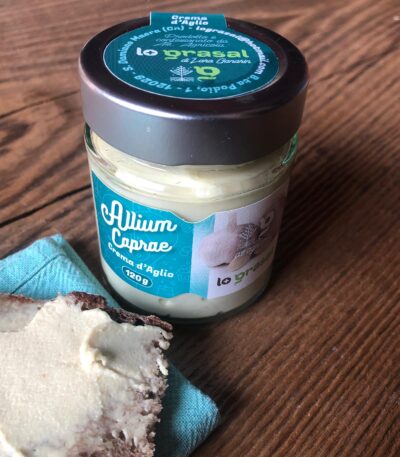
Crema all’aglio
€4.50Crema spalmabile a base di aglio, olio di semi di girasole a latte di capra.
Ideale per bruschette, bolliti, insaporire piatti
110g
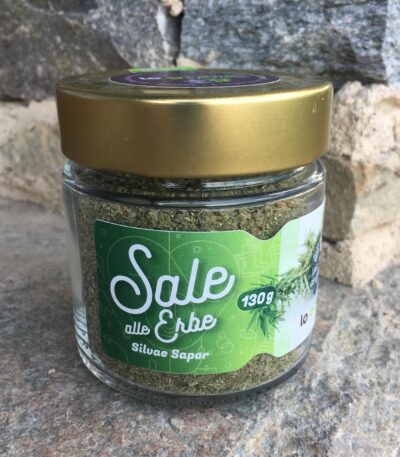
Sale alle erbe
€7.00Rosmarino, ortica, timo, ginepro unite al sale integrale della Riserva Naturale dello Stagnone di Marsala (Sicilia),
sviluppano un mix unico di aromi e sapori, potenziando le loro proprietà.
Le erbe di questo preparato sono in parte coltivate e in parte raccolte selvatiche all’altitudine di quasi 1’000 metri s.l.m.
Per insaporire carne, pesce, zuppe, frittate
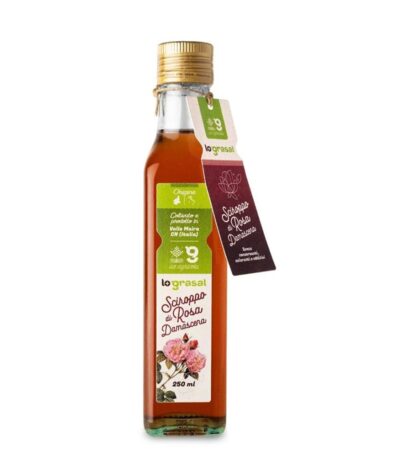
Sciroppo di rosa damascena
€8.00Sciroppo non alcolico ottenuto dall’infusione dei petali di rosa damascena in soluzione zuccherina con la sola aggiunta di limone.
Le rose damascene sono coltivate a quasi 954metri s.l.m.
idee per l’uso: profumare cibi e bevande
Ideale come aperitivo con vino bianco fresco,
ottima bevanda analcolica con acqua fresca.
Piacevole nel tè caldo, ottimo in sorbetti e gelati.
bottiglia da 250ml
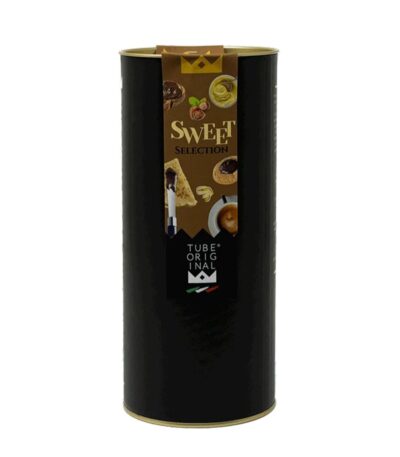
Linea TubeOriginal Sweet Selection
€20.50Il tubo può essere composto da 3 dei seguenti vasetti:
- Cioccolato di Modica e Crunch di nocciole
- Crema di Pistacchio
- Crema dark di nocciole
- Crema di Nocciole
- Crema Espresso
- Crema di Arachidi
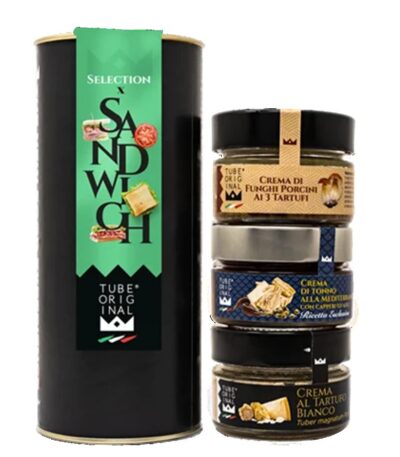
Linea TubeOriginal Selection Sandwich
€23.30Il tubo Le Selection contiene 3 vasetti:
- Crema al tartufo bianco
- Crema di Funghi Porcini ai 3 Tartufi
- Crema di Tonno alla Mediterranea
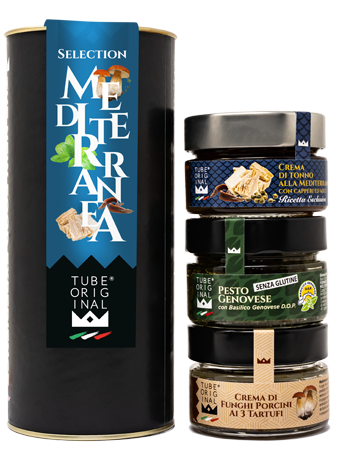
Linea TubeOriginal Selection Mediterranea
€21.30Il tubo Le Selection contiene 3 vasetti:
- Crema di Tonno alla Mediterranea
- Pesto Genovese con Basilico Genovese D.O.P.
- Crema di Funghi Porcini ai 3 Tartufi
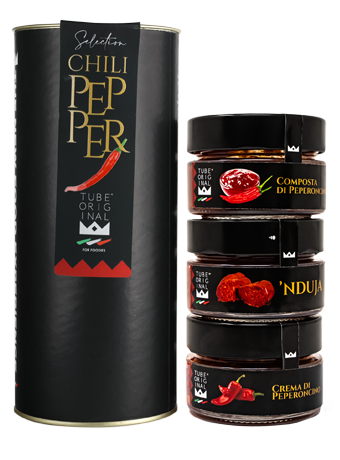
Linea TubeOriginal Selection Chili Pepper
€18.60Un tris di vasetti con creme dal sapore vivace a base di peperoncino. Una vera delizia per gli amanti delle note piccanti che solleticano il palato.
Un asso nella manica per tutti gli chef e gli appassionati di cucina.
Il tubo Le Selection contiene 3 vasetti:
- Crema di peperoncino
- Composta di Peperoncino
- ‘Nduja
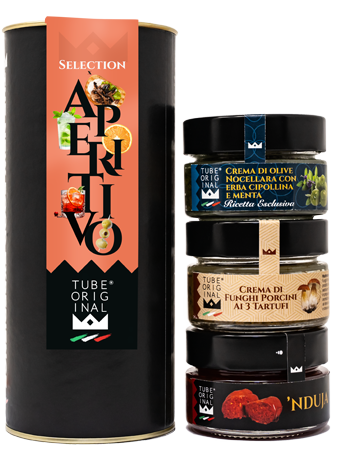
Linea TubeOriginal Selection Aperitivo
€20.80Il tubo Le Selection contiene 3 vasetti:
- Crema di Olive Nocellara con Erba Cipollina e Menta
- Crema di Funghi Porcini ai 3 Tartufi
- ‘Nduja
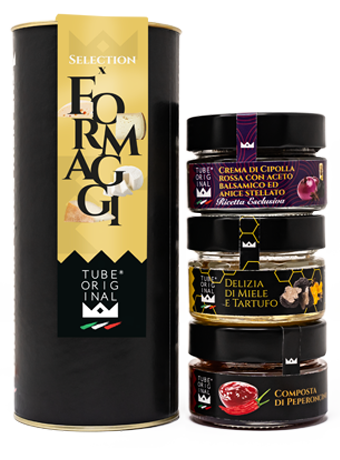
Linea TubeOriginal Selection Formaggi
€20.20Il tubo Le Selection contiene 3 vasetti:
- Crema di Cipolla Rossa all’Aceto Balsamico ed Anice Stellato
- Delizia di Miele e Tartufo
- Composta di Peperoncino